


Why Early Planning Can Help Protect Their Wishes, Finances, Home and Independence Noticing changes in an aging parent or loved one can be difficult. Maybe Mom has always been incredibly organized, but suddenly bills aren't getting paid. Dad is repeating the same financial questions. A parent who has always been cautious with money suddenly believes a stranger on the phone who says they've won a prize. Or maybe nothing dramatic has happened at all. You simply know your parent well enough to recognize that something feels different. This can be an uncomfortable conversation for families, and it's easy to put it off. But one of the most important things we've learned from working with families through major life transitions is this: Early planning gives families options. A crisis can take options away. A Diagnosis Does Not Automatically Mean Someone Has Lost Legal Capacity This is an important distinction. Families sometimes assume that a diagnosis of Alzheimer's disease, dementia, or another cognitive condition automatically means their loved one can no longer make decisions or sign legal documents. That isn't necessarily true. A medical diagnosis and legal capacity are not the same thing. Capacity can depend on the individual, the decision being made, and the circumstances at that particular time. This is why families should seek guidance from qualified medical professionals and an Arizona estate-planning, elder-law, or probate attorney rather than trying to make that determination themselves. The goal should never be to unnecessarily take control away from someone. Whenever possible, the goal is to allow your loved one to participate in planning for their own future while they are still able to clearly express what they want. Don't Wait Until You Need the Paperwork One misconception we hear is: "If Mom eventually develops dementia, I'll just get a Power of Attorney then." Unfortunately, it may not be that simple. A Power of Attorney is something the person granting authority must have sufficient capacity to execute. If capacity has already been lost and appropriate planning documents aren't in place, the family may need to pursue a court-supervised guardianship, conservatorship, or both. In Arizona, these serve different purposes. A guardian generally has authority involving personal and health-care decisions, while a conservator generally manages the protected person's finances and assets. And this isn't simply a matter of filling out a form at the courthouse. The Cost of Waiting Can Be Significant One Arizona probate firm we regularly work with advises families that even a relatively straightforward guardianship and conservatorship proceeding can start at approximately $15,000 in legal and related costs . Complicated or contested cases can cost considerably more. And the costs and responsibilities don't necessarily end when someone is appointed. Arizona conservators are subject to ongoing court oversight and generally must provide financial accounting to the court. The Arizona Judicial Branch requires an initial budget and accounting process followed by annual conservator accounts for subsequent years while the conservatorship continues. There can therefore be additional legal, accounting, fiduciary, and administrative expenses over time. This isn't meant to scare families into taking action. It's meant to explain why waiting until a crisis occurs can dramatically reduce the family's options. There May Be Another Option When Capacity Is Questioned When there is uncertainty surrounding someone's cognitive capacity, one probate firm we regularly work with has advised families that an evaluation by a neurologist or other appropriate medical professional may provide important evidence regarding the person's cognitive functioning. That route can potentially cost significantly less than immediately pursuing a guardianship or conservatorship. But there can be another problem: Time. The probate professionals we work with have seen families encounter waits as long as six to nine months for appointments with certain specialists. Imagine discovering this when you suddenly need to make an important housing, financial, legal, or medical decision. The appointment you need may not be available for months. That's another reason families shouldn't wait until an emergency to begin these conversations. What Should Families Watch For? None of the following automatically means someone has dementia or lacks capacity. There are many reasons a person's behavior can change, and medical concerns should be evaluated by appropriate health-care professionals. But changes worth paying attention to may include: Bills that were always paid on time suddenly being missed Repeated confusion surrounding familiar financial tasks Unusual purchases or withdrawals Difficulty keeping track of appointments or medications Repeatedly asking the same financial questions Becoming unusually trusting of strangers Falling for offers or scams that previously would have raised immediate suspicion Sudden changes in financial habits New people becoming unusually involved in their finances Uncharacteristic decisions involving major assets The goal isn't to diagnose your parent. It's to recognize when it may be time to start asking questions. Cognitive Decline Can Also Increase Vulnerability to Scams Unfortunately, financial exploitation is another reason families should pay attention. The Arizona Attorney General specifically identifies protecting older adults from financial exploitation and consumer scams as an elder-affairs priority. The FBI also identifies lottery and sweepstakes schemes as common frauds targeting older Americans. We recently heard about a particularly frightening example. A senior was told they had won a Publisher's Clearing House-style prize of more than $500,000. There was just one catch. They supposedly needed to pay the "taxes" first. The requested payment was nearly $100,000 . That's a classic warning sign. Legitimate sweepstakes do not require winners to send enormous advance payments in order to receive a prize. Similar lottery and sweepstakes schemes have been used for years to target older adults. Scammers don't necessarily need someone to be completely incapacitated. They may only need a moment of confusion, fear, loneliness, trust, or vulnerability. The House Can Be a Target Too This is where our experience in real estate becomes particularly important. For many older adults, their home is their largest financial asset. And sometimes it's completely paid off. That can make the property—and the equity inside it—especially attractive to people looking to take advantage of a vulnerable homeowner. Families should be alert for things such as: Unexpected changes to deeds or ownership Documents the homeowner doesn't remember signing Pressure to sign paperwork quickly Extremely low cash offers Someone insisting the home is worth substantially less because it needs repairs Unfamiliar people suddenly becoming involved with the property Attempts to obtain personal or financial information Offers promising to "take all the stress away" without explaining what the homeowner is giving up financially Not every cash offer is predatory. There are absolutely situations where someone knowingly chooses to accept less money in exchange for speed, convenience, certainty, or avoiding repairs and showings. The important word is knowingly. A homeowner should understand the available options and approximately what each option means financially before making that decision. Convenience Has Value—But So Does Equity We've helped many families compare an immediate as-is cash sale with selling traditionally on the open market. Sometimes the cash option makes perfect sense. Other times, the difference in proceeds can be tens of thousands—or even hundreds of thousands—of dollars. Our job isn't to decide which option someone should choose. Our job is to make sure they can see the numbers clearly enough to make an informed decision. For someone experiencing cognitive changes, having trusted family members and appropriate legal and financial professionals involved can become especially importa nt. Planning Early Is About Preserving Control Sometimes families hesitate to bring up estate planning or Powers of Attorney because they're afraid their parent will feel as though everyone is trying to take control. I think it's helpful to look at it differently. Planning early can actually help preserve your loved one's control. When someone can clearly communicate their wishes, they can participate in deciding: Who should help manage their finances if they eventually cannot? Who should make medical decisions? Where would they prefer to live? What happens to their home? Who do they trust? What matters most to them? Arizona provides Life Care Planning resources, including Health Care Power of Attorney documents, specifically to help people make their wishes known regarding future medical decisions. Waiting until capacity has been lost may mean some of those decisions eventually require court involvement instead. Start With the Right Professionals If you're beginning to notice cognitive changes in someone you love, you don't need to solve everything yourself. And your Realtor shouldn't be diagnosing your parent or giving legal advice either. Depending on the circumstances, the right team may include: Their physician To evaluate medical or cognitive concerns. An Arizona estate-planning or elder-law attorney To review existing Powers of Attorney, trusts, estate documents, and planning options. A financial professional or CPA To help identify unusual financial activity and protect assets. Trusted family members To help create additional eyes and ears around someone who may be becoming vulnerable. Senior living or placement professionals If housing or care needs are beginning to change. An experienced real estate professional If the home eventually becomes part of the transition. This is exactly why we developed The Rover Network. No single professional should try to be the answer to every problem. The goal is to recognize when it's time to bring the right person into the conversation. What Can Families Do Right Now? If you're seeing changes but there isn't an immediate crisis, start with conversations rather than control. Encourage your loved one to: Schedule an appointment with their physician Review existing estate-planning documents with an attorney Confirm who is named in Powers of Attorney Make sure trusted people know where important documents are located Review financial accounts for unusual activity Consider alerts or additional safeguards on major accounts Be cautious about unsolicited calls, emails, contractors, investors, and "prize" notifications Review how their home is titled Talk openly about their wishes if their housing needs eventually change The Arizona Attorney General maintains elder-affairs and Life Care Planning resources for Arizona families, including information about scams and advance health-care planning. From Angela's Desk One of the hardest things about watching someone you love age is knowing when to step in and when to step back. No one wants to make a parent feel incapable simply because they're getting older. And one forgotten bill or misplaced set of keys certainly doesn't mean someone has dementia. But I've also seen what happens when families wait until something has gone terribly wrong. By then, the conversation isn't about planning anymore. It's about solving a crisis. I think there's a better way. Pay attention. Have uncomfortable conversations while they can still be conversations. Bring in qualified professionals when something doesn't seem right. And most importantly, let your loved one have as much voice as possible in deciding what their future should look like. Planning isn't about taking their independence away. Done properly, it may be one of the best ways to help protect it. Frequently Asked Questions Does a dementia or Alzheimer's diagnosis automatically mean someone can't sign a Power of Attorney? No. A medical diagnosis does not automatically determine legal capacity. Capacity can depend on the individual, circumstances, and the particular decision or document involved. Families should seek advice from appropriate medical professionals and a qualified Arizona attorney rather than making that determination themselves. What's the difference between guardianship and conservatorship in Arizona? Generally, a guardian is responsible for personal and health-care decisions, while a conservator manages finances and assets. Arizona courts supervise these arrangements, and conservators have ongoing financial reporting responsibilities. How much does guardianship or conservatorship cost in Arizona? There isn't one fixed amount. One Arizona probate firm we regularly work with advises families that even a relatively straightforward guardianship and conservatorship can start around $15,000 in legal and related costs. Complicated or contested matters may cost considerably more, and ongoing court supervision can create additional expenses. Should we have Mom or Dad evaluated if we're noticing cognitive changes? Start by discussing your concerns with appropriate medical professionals. When legal capacity is also a concern, an elder-law or estate-planning attorney can advise whether additional medical evaluation or documentation may be appropriate. What should I do if I think my parent is being scammed? Act quickly. Contact the relevant financial institution if money may be at risk, preserve documentation, and consider contacting appropriate law enforcement or consumer-protection agencies. The Arizona Attorney General's Elder Affairs resources include information for reporting scams and elder exploitation. What if someone is trying to buy my parent's house for far below market value? Don't sign anything until the homeowner and appropriate trusted representatives understand the property's likely market value and the terms being offered. An as-is cash sale can be a legitimate option, but the homeowner should understand the financial tradeoff before making that choice.

Yes. And there are some very good reasons why you may want your own representation. We sell quite a few manufactured homes throughout the Phoenix area, partly because there are so many manufactured-home communities near us. Many of these communities work differently from a traditional neighborhood. You may be buying the home but not the land underneath it . Instead, you pay monthly lot rent to the community. The park may also have its own rules, application process, age requirements, pet restrictions, fees and other requirements. And there is another big difference buyers often don't realize. The Salesperson at the Park May Not Be a REALTOR® Many manufactured-home communities have their own sales office or salespeople who help sell homes within the park. That does not automatically mean they are Arizona real estate agents or REALTORS®. Arizona has a separate licensing system for people who sell manufactured and mobile homes. Depending on the situation, a salesperson may be licensed through the Arizona Department of Housing and work for a licensed manufactured-home dealer or broker rather than being licensed as a real estate agent. Why does that matter? Because when you walk into the park sales office, you should understand who that person represents. Someone who is helping sell a particular home is not automatically your buyer's representative. Those are two very different jobs. Can I Bring My Own Real Estate Agent? Yes. We regularly represent buyers purchasing manufactured homes in land-lease communities. Just like any other real estate representation, it is important to discuss with your agent before you begin shopping how they will be compensated. In a traditional Arizona residential resale transaction, a buyer may request that the seller contribute toward the buyer's broker compensation as part of the purchase offer. That request is negotiable, and the seller is not required to agree to it. Manufactured homes located on leased land may be sold using a different process and different paperwork, and the park, dealer or seller may not offer or agree to pay a buyer's agent. That does not mean you can't have your own representation. It simply means you and your agent should discuss the transaction and compensation ahead of time so you understand your options and any potential cost before moving forward. For many buyers, having someone at the table whose job is specifically to represent their interests can be extremely valuable. Don't Skip the Inspection Just Because Someone Says You Don't Need One This is probably one of my biggest concerns. I have personally heard salespeople tell buyers that they don't need an inspection or that inspections aren't done on manufactured homes. Nope. Manufactured does not mean maintenance-free. These homes can still have expensive problems involving: HVAC systems Plumbing Electrical systems Water heaters Roofs Windows and doors Subfloors Appliances Additions and Arizona rooms Structural or support components An inspection on a manufactured home may look somewhat different from one on a traditional site-built home, and you want an inspector familiar with manufactured housing. But the idea that you should simply buy one without inspecting it because "that's how it's done here" should make you ask more questions, not fewer. "It's Being Sold As-Is" Doesn't Mean Nobody Will Negotiate Another statement I recently heard was that homes in a particular community were sold AS-IS with no repairs. The words "as-is" can sound pretty intimidating. But here's what buyers need to understand. Even the standard Arizona residential resale contract states that the property is being sold in its present condition. That doesn't mean buyers shouldn't inspect the home or that the parties can never negotiate after problems are discovered. We've represented buyers who had inspections performed on manufactured homes and discovered problems. And guess what happened? We've had sellers agree to make repairs. We've had sellers offer credits. We've negotiated solutions that worked for both sides. Why would a seller agree to that? Because sometimes the alternative is losing the buyer. If there are 20 other manufactured homes for sale in the same community and an inspection uncovers an expensive problem, a seller may decide that working something out makes much more sense than watching the buyer move on to another home. What a buyer can request, and what happens after an inspection, will depend on the particular agreement being used. But hearing the words "as-is" should never be confused with "don't inspect it." Be Careful How Much You Tell the Park Salesperson This one doesn't get talked about enough. I've toured manufactured homes with buyers while a community salesperson accompanied us. And I've been amazed at some of the information I've heard. Things like: "The seller has cancer and really needs to sell." "They're getting divorced." "They need this sold immediately." "They'll probably take just about any offer." From a buyer's perspective, that information can certainly affect negotiations. But here's the other side of that coin: What is being said about you after you leave? Suppose you tell the salesperson: "We absolutely love this one." "This is the only community we'll consider." "We have to move before the end of the month." "We could probably go another $15,000 if we had to." You may have just handed over information that could weaken your negotiating position. When we represent a buyer, we're careful about what information gets shared and why. You don't need everyone involved in the transaction knowing your maximum budget, your deadline, how emotionally attached you've become to the home or how badly you need the deal to work. There's a time for showing your cards. Negotiating the purchase price usually isn't it. You're Also Buying Into the Community With a land-lease manufactured home, evaluating the house is only half of the homework. You also need to understand the park. Before purchasing, buyers should investigate things such as: Current monthly lot rent What the lot rent includes Community application and approval requirements Additional monthly or annual fees Pet restrictions Parking and vehicle restrictions Rules regarding occupants Rules regarding improvements to the home Amenities Utility responsibilities Any applicable age restrictions Community rules and regulations How and when lot rent may change A beautiful home can become much less attractive if you discover afterward that the community rules or monthly costs don't work for you. One More Important Difference: The Title Arizona manufactured and mobile homes that have not been permanently affixed to real property generally have certificates of title issued through the Arizona Motor Vehicle Division. That's one reason these transactions can look very different from purchasing a traditional house and lot. If the manufactured home has been permanently affixed to real property, however, the ownership and title process is different. This is another area where buyers should make sure they understand exactly what they're purchasing: the home only, or the home and the land. The Bottom Line You absolutely can have your own real estate agent represent you when purchasing a manufactured home in a land-lease community. The park salesperson may be perfectly helpful and knowledgeable about the community. But that doesn't automatically make that person your representative. Those are two different things. Independent representation gives you someone who can help you evaluate the purchase, review comparable sales, think through an offer, protect your negotiating position, coordinate inspections and help you understand what you're agreeing to before you sign. Manufactured homes can be a great option for buyers looking for affordability, amenities or a particular lifestyle. Just don't confuse a simpler-looking purchase with a purchase that doesn't deserve proper due diligence. Frequently Asked Questions Can I use a REALTOR® to buy a manufactured home in an Arizona land-lease community? Yes. Buyers can choose to hire their own real estate agent for representation. How that agent is compensated should be discussed before beginning the home search. Depending on the transaction, the seller, dealer or park may or may not agree to contribute toward the buyer's agent compensation. Your agent can explain your options before you make an offer. Do manufactured homes have titles in Arizona? Generally, Arizona MVD issues certificates of title for mobile and manufactured homes that are not affixed to real property. A home permanently affixed to real property is handled differently, so buyers should verify how the particular property is titled. Should I get an inspection on a manufactured home? We strongly recommend buyers consider an inspection. Manufactured homes can have many of the same costly problems as other homes, including HVAC, electrical, plumbing, roofing and water damage. Look for an inspector experienced with manufactured housing. If a manufactured home is being sold as-is, can I still ask for repairs? Depending on the purchase agreement, inspection findings and circumstances, buyers and sellers may still negotiate repairs, credits or other solutions. "As-is" should not be interpreted as "don't inspect it" or "don't ask questions." Does the salesperson in the park represent me? Don't assume so. Ask directly who the salesperson represents and what type of license they hold. A manufactured-home salesperson working for a dealer or broker is different from hiring a real estate agent specifically to represent you as the buyer. What should I investigate besides the manufactured home itself? The land lease and community rules are extremely important. Review lot rent, fees, application requirements, utilities, pet rules, parking restrictions, occupancy requirements, amenities and other community regulations before committing to the purchase. This article is intended for general educational purposes and is not legal advice. Manufactured-home transactions, community requirements, contracts, title status and representation agreements can vary significantly. Buyers should rely on their specific purchase documents and community agreements and consult the appropriate licensed real estate professional, manufactured-housing professional, title professional and/or attorney regarding their individual transaction.
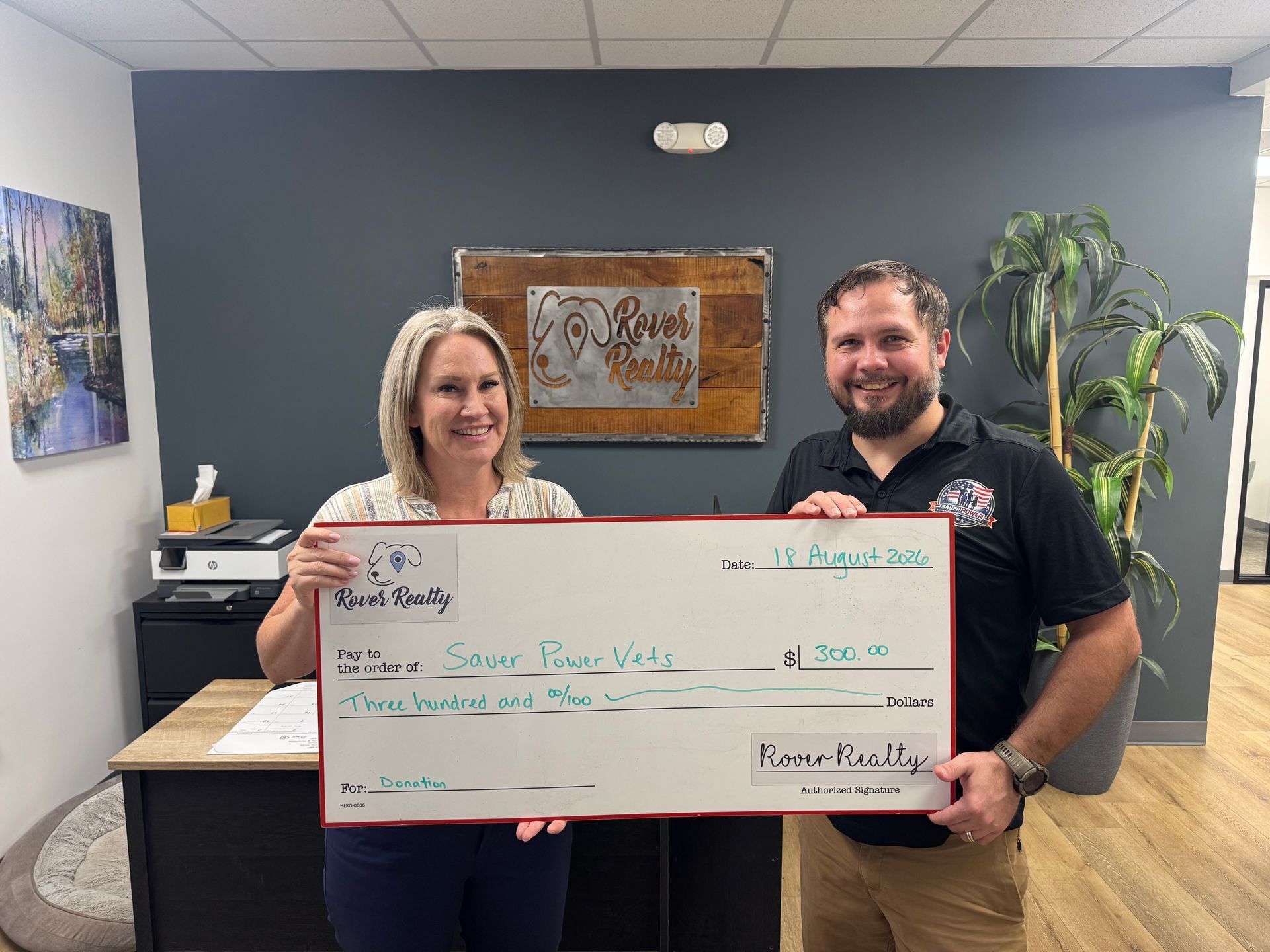
At Rover Realty, we believe that supporting our community goes beyond real estate. Each month, we’re proud to give back to organizations making a meaningful difference, and this month, we’re honored to support SauerPower Veterans Empowerment Alliance (SPVEA) .